4 Steps to Protecting Your Digital Life (Page 1 of 4)
Categories: Backup and Restore

Throughout the nineties, the home computer revolution exploded. For the first time, computers were no longer for the geeks and business users. And while many began discovering the joys of using computers for the first time, those same users also started learning some hard lessons about the dark side of computing, like data loss, viruses, scams, and more.
Over the first 10 years of computing, users have been beaten into submission to take some basic steps to protect their data from loss. How many times were you told to "save early, and save often" so you didn't lose your work if your computer locked up.
As Internet access became more widespread, so too did viruses and malware, also threatening to steal and destroy your personal data. I easily could have started here as the first step to complete data protection, but this day and age most computer users know to have some kind of security software installed, and I suspect most who have a "Digital Life" do.
Data Protection Step 1: Back Up Your Digital Life
Is it surprising to you that backing up your data is the "first" step to data protection? If you're a hardcore PC enthusiasts at the forefront of technology, this would make sense. However, most "regular" folks I talk to who do put in some sort of effort in backing up their personal data think of it as the last step, not the first.
More surprising is the sheer number of people who have gigabytes of digital photos and videos scattered across their home computers, with no backup solution at all. Oddly enough, many of them have also lost data as a result of a hard drive crash or other issue, but either have no clue how to really protect themselves or are just too lazy to backup their data on a regular basis.
I'm not sure how much I can stress the importance of regular data backups, but I'll take a stab at it. If you want to have any hope of preserving your important data, digital photos, home videos, tax documents, purchased digital music, etc) over the next 5 to 10 years, you MUST back it up regularly.
If it only lives in one place (meaning on one computer or physical drive), you're at serious risk.
And no, RAID is not enough. RAID is great, but that will only help you in the event of a single hard drive crash. You also need to protect yourself from yourself, and protect yourself from things that can take down an entire computer.
How to Back Up Your Digital Life
If you're not sure where to begin, here's a look at the various ways you can start to back up your irreplaceable personal data.
Optical Disc
When writable CDs and DVDs debuted, it seemed like optical discs offered the storage and convenience to make it an effective back up solution. It may very well be if you just don't have that much to back up.
If you do, though, you're probably out of luck. Even while the latest writeable disc technology (Blu-Ray) offers 25GB of space, consumer hard drives have ballooned into the terrabytes. With 12 mega-pixel digital cameras now common and digital camcorders shooting HD home movies, you'll end up using a ridiculous number of discs for backup.
Pros: Good for backing up smaller libraries, blank media is affordable to a certain point.
Cons: Expensive for larger libraries, time consuming, write-once discs means a lot of waste.
Direct Attach Storage or simple Network Attach Storage
Mechanical hard drives offer a rediculous amount of storage for the money. For example, a simple 1TB external USB hard drive can come in under one-hundred dollars on sale. Unsurprisingly, the vast number of computer users out there who do back up their personal data use a simple external hard drive.
The direct attach and network attach external storage space offers a huge variety of devices for data storgage. Most are just simple drives, while some, like HP's nifty SimpleSave drives, come with software that makes using them for back ups much easier by scanning your files and locating important data for backup.
The next level of these devices include data redundancy, meaning they write your data to more than one drive. These are often more expensive, but offer a greater level of protection for your backup data. If you plan on using this drive to archive data (remove it from your PC and keep it here), data redundancy is critical.
While many have found using these simpler storage devices to be effective for backing up data, there's one huge issue with them that makes me shy away from recommending them. That problem - the user. The number one reason these devices fail to provide adequate protection is because they require effort. In most cases, you have to initiate the backup, make sure your latest copies are on there, etc. Many who I talk to who use this form of backup haven't done a backup in weeks, sometimes months. It's just too easy to put off doing it or forget entirely.
Pros: Cost effective, simple to set up.
Cons: Easy to forget, takes time and effort, not always data redundant.
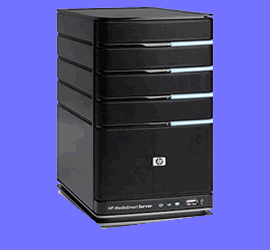
HP MediaSmart Server / Windows Home Server
This is a website devoted to the HP MediaSmart Server, and I'm clearly a fan of their product and Windows Home Server in general. That said, I'll try to be objective here and give you the facts and not sound like a promo.
Windows Home Servers like the HP MediaSmart Server are a more expensive backup solution than a simple direct attach or network attach device, but do offer far more flexibility and functionality than just backup. However, I'll just focus on its backup abilities here.
As a data protection device, the HP MediaSmart Server has you covered in several ways.
For starters, backups are done at the drive level, which means you don't have to choose what backs up. It grabs a copy of your entire drive so nothing is missed, and because of how it stores data intelligently, it can house multiple backups of the same drive over a period of time. This lets you reach back to a backup months ago to grab a version of a file before you made a stupid mistake several weeks ago that you just caught now.
Second, everything can be set up to happen automatically. At some point overnight, your computer will wake up, backup to the server, then go back to sleep. No effort needed.
Third, it's a whole home solution. For those with spouses, kids, and multiple computers, the home server can manage the backups for all of them automatically. As your families data storage needs grow, your home server can easily grow with them.
Finally, it offers entire PC restoration. Not only can you backup your entire drive, but you can also restore an entire computer from it in the event your PC goes down from a hard drive failure or virus. Less downtime... less headache.
As a longtime user of Windows Home Server and the HP MediaSmart Server, I personally feel it's an ideal solution for the modern digital family. It's not perfect, though. The setup and adminstration is far more complicated than a basic external drive, and when things don't work, figuring out why isn't always easy. I've had few issues personally; my server chugs along and does its thing with little attention from me.
Pros: Whole home solution, complete drive backup and restoration, tons more features.
Cons: Cost, complexity.
Think About Your Strategy
Think about your current strategy for backing up your data. When did you last do a backup? If your computer's hard drive were to fail today, what would you lose?
Continue to Step 2 >>
RSS