LX-195 is a great product! Everything Allen says about its attributes is true. I purchased one in lieu of building my own (after I had a physical hard drive crash). The LX-195 is a self installing plug and play device; customer service is excellent. We have three connected computers, one laptop has remote access. Experiencing the convenience of what a home server does makes you rethink what a home network should be.
MediaSmart Home Interview: We talk with Allen Buckner about the LX-195, and Postitioning MediaSmart as NAS Alternative
Categories: HP MediaSmart Server
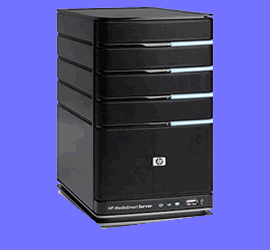
The MediaSmart Server LX-195, though dramatically different from a hardware perspective, maintains the performance and features of HP's more expensive models at a sub $400 price. Combined with an apparent goal to pit the MediaSmart Server as a serious alternative to traditional NAS products, the MediaSmart Server lineup is making waves at retail. We talk to Allen Buckner, Marketing Manager for the Home Server Group at HP, about the LX-195 and HP's positioning of the MediaSmart Server in the marketplace.
| MW: The last time we spoke happened to be just before the LX-195 shipped. Now that it's out and everywhere at retail, it would be great to talk about it and hear more on some other changes with HP's strategy surrounding the MediaSmart Server. Tell us, in your own words, about the LX-195 and some of the struggles and decisions you faced designing it. Tell us about what you were trying to achieve with this product. |
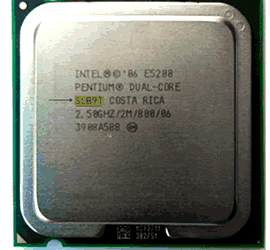
![]() | AB: The LX-195 objective was really simple; bring the home server platform down to a more affordable level so we can reach out to more customers. So, you can think of it as a product targeted for someone who might be considering network storage, but is looking for something that's just drop dead simple for backup, media sharing, and media collecting. In terms of our design principles, we were certainly looking for a more affordable platform, and obviously we went for a single drive, but the design principles were similar to what we used for our EX products. We wanted to try to get a small chassis, very quiet, but still offer the customer a path to upgrade the drive as their needs grow over time. So we did that, and tied to it [are things that make it] small, quiet, and efficient. Like the Atom processor we chose, which is the brains of the product, allows us to provide really good performance with a low power draw. In addition, the really nice thing about that processor is our read/write speeds are far faster than what you get with a traditional, consumer-grade networked attached storage product. To recap, I think the customer out there buying a product like this would meet the requirements if they have multiple computers, are looking to keep them all safe, and have easy access to them. And so, as they start to shop for devices like that, we felt like we have the higher end covered with our EX product line, so we wanted to get down into a more entry-level area and give people some alternatives when they're looking for a network attached storage product. |
| You talked a little bit about the target market and who the LX-195 is for. Can you expand on that a little? And in that target market, is it making the impact you hoped it would? |
![]() | The LX-195, and really any of our home server products, are targeted to any home that has multiple PCs, or in the case of our Media Smart Server products, also PC/Mac mixed households. That's really the target; if you have multiple PCs you more than likely already have a home network already set up, and you're facing the problems that these products are designed to solve. You're seeing an increasing amount of digital content, both personal content like digital photos, as well as purchased content like music and movie downloads. What we hear repeatedly from these customers is that they need a simple, automated way to keep it all safe, but beyond just the backup element, they want to keep it all accessible. Even with the LX-195, it's truly that same type of customer. They just may not be as high up on the digital enthusiast scale and have the same amount of content as some of our EX buyers do, but they still have those same basic needs of "keep it safe, keep it accessible." The second part of your question, related to the impact... it's still a little early. We're very pleased with the number of positive reviews. We won a CNET Editors Choice Award, and we feel like as the customer starts to become aware of home severs as a solution they'll read these types of reviews and are going to increasingly turn to products like this as the central hub in their home for their content. |
| The LX-195 compared to the EX-485, thanks to some sales and some low street prices on the EX485, the price difference isn't dramatic. We took a stab at this on in our review of the LX-195, but in your opinion, why would somebody choose the LX-195 over the EX-485? |
![]() | Of course, the suggested retail price difference is $200. I think the answer to that is the LX-195 starts below four hundred dollars, and that is a price that brings it down to a new set of buyers who aren't able or willing to spend five hundred, six hundred, seven hundred dollars on a home server product. The nice thing is that a lot of our retail and e-tail partners have been running some really nice deals on the EX line of products as well, and that makes for a nice choice. Why you would pick one over the other? I think that a better question would be, "Why you would buy an EX over an LX?" You start with the LX, and the feature sets between the products are very similar. And so what we find is a person who buys an LX is looking for an entry level product; they may only have two or three PCs and don't have that much content yet. The people who are a little more down the path and have a lot of media or four, five, or six PCs in their home look at the EX and say, "gosh I want that extra expandability with the four drive bays." So they make that choice. Ultimately, whichever one they pick... we're happy (laughs), and we hope what we're doing is allowing some customers who may have been unable to look at a product like this because it was a little beyond their reach in terms of price or complexity, and now we're bringing it down with the LX product so they can make that determination on their own. |
| If you go shopping for one of these, one of the interesting things you'll find is that, as of right now, the MediaSmart Server EX-485 is the top selling NAS device on Amazon.com right now, and the EX-487 and LX-195 are all in the top 20. Is HP now pushing this as a NAS device instead of a server? What do you think... server or NAS? |
![]() | That said, MediaSmart Server is a superior solution compared to a NAS, and there are three reasons for that. First off, the simplicity of backup, and when necessary, recovery is just unmatched compared to a NAS product. I'd invite people to go read reviews of the MediaSmart Server and NAS products and you'll see what I mean by that. Secondly, the server architecture and platform is so much more robust in terms of media capabilities. So, when you start talking about remotely accessing files, remotely streaming media either to a PC or device like an iPhone, or doing in-home streaming to devices like an XBOX, you're just not going to get the performance or consistency that you need in a NAS product with that architecture when you compare it with what you get out of a home server. And again, I invite people not to necessarily take my word on it, please go read reviews scattered around the web and I think you'll see that those reviews will substantiate that point. The final one, which we touched on a little bit earlier, is just the raw performance attributes of a home server, the architecture of the Windows Home Server operating system. You're going to get significantly and noticeably faster performance when you're doing file access, like storing, reading, and streaming a file than you're going to get relative to a NAS product. |
| Typically, you wouldn't have thought to compare the performance of a server product, like the MediaSmart Server, to your simple NAS device. According to a few write-ups out there, the LX-195 in particular, is outperforming other NAS devices by a huge factor... at least without any USB drives attached. Given the price difference between these devices, it's pretty surprising. Is it surprising to you? How much does your team focus on raw performance when designing MediaSmart Server products, compared to features? |
![]() | I actually don't think it's all that surprising. The LX-195 is running Windows Home Server, and it is a PC architecture. So, when you compare that to a network attached storage architecture, it just can't compete in terms of performance. We're very cognizant of this when we're designing our products. As we see and hear how customers are using these as hubs in their homes, the last thing you want in that situation is slow or sluggish file access and choppy media streaming... which we've seen with many different NAS products that we've tested in our labs. I can even give you a personal anecdote by saying in my own home I've actually, truly adopted this "hub" strategy. I keep my photos, my music, and my video libraries directly on the server, and then use my PCs and other network devices as thin clients scattered around the house. In that environment, it's absolutely critical that you have high performance, because when myself or someone in my family goes to open a file they're expecting it to be as if they were opening it right there on their own PC. I think when you start comparing that type of setup to what you would get doing that on a network attached storage device, that's when the advantages become really clear as to why you want the more robust architecture that you get with home server. So, I think performance is critical. I think the best way to realize that is to go and read Small Net Builder and other sites that do performance evaluations. The best way to really test it is to just experience it. It's not real easy for consumers to really do that, but we're trying to help educate them on why you need a more robust platform, but again my personal experience has shown that you want to have that really nice, really fast and seamless connectivity when you're accessing your video and music files in the home. Otherwise, people get very impatient when it doesn't behave the way they expect it to given the speed and ease of use enhancements we've seen in computing over the last several years. |
| I'm told that you have a special promotion going on right now for the LX-195. Can you tell us about that? |
![]() | Right now, through July 22nd at the HP direct site, any customer that's preparing to buy a PC or notebook for their home can get an LX-195 for half off the $399 retail price. So, it's a great price, trying to get anyone who's ready to add another PC or notebook into their home to also make it easy for them to add the backup and media sharing capabilities that come with the LX-195. So, again, that's through July 22nd at the HP direct website. |
I'd like to once again thank Allen for taking the time out of his busy schedule to talk with the MediaSmart Home Community. We certainly hope to share more interviews with Allen and others in the Home Server Group in the future.

Certainly, these are servers, and servers can have some significant advantages over a NAS. But first, let me take your question head on. In our minds, any customer that's considering buying a NAS product should absolutely be first considering a home server. So we're trying to make people aware of our home server alternatives by placing them among the NAS devices, as well as continuing to place them among traditional PCs where they've traditionally been merchandised. So, there is a reason for that.
RSS