how to convert raw file system to fat or ntfs file system
How To Convert FAT/FAT32 to NTFS
Categories: Backup and Restore Computers and Laptops
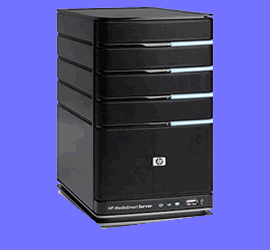
Newcomers to the MediaSmart Server may encounter a strange message when they install the Home Server Connector software on their computer. This message can occur when the software goes to set up the automatic backup process, and states that your computer uses an incompatible file format for backup or "Windows Home Server can only backup NTFS drives."
In fact, this message graced the computer screen of my wife's laptop when I went to set it up with the MediaSmart Server. Being a bit of a computer nerd, I instantly knew what the problem was, but hadn't realized the ACER laptop (which runs Windows XP Home edition) was formatted with the age old FAT32 file system.
For those a who are a little less tech savvy, Windows XP has the option of formatting the internal hard drive in one of two file formats upon install. If your computer was purchased at retail and preinstalled with Windows XP from the factory, it's possible that your computer was formatted with the older FAT32 file system, as I discovered this laptop was. For most things, you probably wouldn't notice the difference between the two, even though NTFS offers several benefits that FAT32 doesn't offer. If you want to read more about these file systems, you can learn more in the Microsoft Knowledge Base.
As a side note, if you're running Windows Vista and only have a single primary volume, you won't see this message. Windows Vista will only install to a NTFS volume.
Considering that most XP users will be running a single OS enviornment (not a multi-boot setup with an older operating system) and that all the software you're running isn't from 1991, there is little (if any reason) to use FAT32 on your Windows XP volumes.
Cutting to the chase, you want to be able to use the automatic backup feature on your Windows XP computer, but this whole "FAT32" problem is standing in your way. There are two ways to solve this problem:
- Backup your data to an external drive, reformat your hard drive, and reload Windows XP from scratch. Of course, this is technically the 'best' way of doing it, but it's a lot of work and anything not backed up will be lost when you reformat your hard drive. Fortunately, there's a much easier way...
- Windows XP has a utility that allows you to convert your hard drive volume file system from FAT32 to NTFS. You won't find it in the start menu, but with a few quick command line keystrokes, you can be up and running on NTFS... WITHOUT having to completely reformat and restore your computer from scratch.
How To Convert from FAT32 to NTFS
Before you begin, it is recommended to backup your important files to an external hard drive or another computer. The convert process will work 99.9% of the time without fail, but it's always a good precaution. It's also important to note that this process is NOT reversible. If there is a valid reason why you need to run FAT32 (dual-boot with an older OS or a really old, but vital software program) you should look into it further before you proceed. Again, for the vast majority of users, there will be nothing standing in your way.
Step 1: Verify your file system is FAT32
In order to do this, click on Start --> My Computer. Single left click on your hard drive icon. In a window to the left, it will give you details on the drive, including what the file system is (if you don't have the handy side windows in view, right click on the hard drive icon and select Properties.)
If you have more than one hard drive or partition, you'll need to check each of them, and repeat the conversion process for all volumes you wish to be backed up by the MediaSmart Server. Make a note of all the drive letters that you need to convert. For most, it will only be the C: drive, but if you have other local partitions with data you want backed up to the MediaSmart Server jot down the drive letters for those as well.
Step 2: Open the command line console
Click on the Start button, then select the "Run" command. This will open a small box with a text field. In this field, type 'cmd' without the quotes and press enter.
If successful, you'll be greeted by the command console (remember what DOS computers looked like back in the day?), which is where we'll do the rest of our work.
Step 3: Enter the convert command
Now that we're in the command console, you'll need to enter in the command that will convert the drives. Make sure you type in the command exactly as it's shown (replace 'X:' with the drive letter you need to convert:
CONVERT X: /FS:NTFS
On each, you will likely be prompted that the drive needs to be dismounted in order to the conversion and will be forced to choose Y or N. When this prompt appears, type Y and hit enter. If the drive can be dismounted by the system and converted without restarting (likely for secondary drives and non-system partitions) it will proceed with the conversion. Depending on the amount of data present and the size of the disk, the conversion will take between 2 and 15 minutes.
When converting your primary system drive, you'll be told told that it cannot convert the drive without restarting and if you'd like to schedule it to convert on your next boot. Select yes to schedule the conversion, then restart your computer. Again, it will take a little time for the conversion to finish.
Step 4: Schedule your automatic backups
Now that you've gotten your disks converted to NTFS, you'll be able to schedule your automatic image backups with Windows Home Server. It only takes a minute to get it all set up.
Log in to the Home Server Admin Console and select the Computers and Backup tab. Right click on the computer you wish to schedule automatic backups for, and select "Configure backup." Follow the easy prompts to configure your backups and you'll be all set.
Wow, I had no idea I could do this.
Before trying this though. I looked up a few things.
1) The conversion is a one-way process. After you convert a partition to NTFS, you cannot convert the partition back to FAT. To restore the partition as a FAT partition, the partition would have to be reformatted as FAT, which erases all data from the partition. Data would then be restored from backup.
2)The conversion of a disk partition from the FAT file system to NTFS requires a certain amount of free disk space be available in order to build the NTFS disk structures.
3) If you are into Math... Convert.exe performs a computation based on the number of preexisting files on the FAT volume and size of the volume to figure out how much free space is required before starting the conversion process. For standard hardware (hard drives with 512 bytes per sector) the equation boils down to the following:
| 1. | Start by taking the size of the volume, in bytes, and dividing by 100. If this value is less than 1,048,576, use 1,048,576. If it is larger than 4,194,304, use 4,194,304. |
| 2. | Add to the above the size of the volume in bytes divided by 803. |
| 3. | Add to the above the number of files and directories on the volume multiplied by 1280. |
| 4. | Add to the above 196,096. |
In addition to the above, if there is extended attribute information on the FAT volume, Convert.exe will take into account the additional space that will be required. Extended attribute information is normally not present and would only be a consideration if the system had been running OS/2 and extended attributes were in use.
The above computation closely mirrors the computation performed by Convert.exe. The exact result obtained on a given system may differ slightly.
But, these are not anything that would prevent me from using it. Great tip!
Have a Sansa device or MP3 player, then check out The latest!
Follow Me on Twitter
I tried using this command on my windows vista to try to get my 5 external hard drives that are currently FAT 32 systems, to convert to NTFS but I'm getting this message:
"Access denied as you do not have sufficient priviledges. You have to invoke this utility running in elevated mode."
What should I do? If you could help me out with this, I'd be greatly appreciated.
Thank you very much
View unverified member's comment - posted by Colargol66
Yes, I did find the solution: you have to be logged in as the administrator.
View unverified member's comment - posted by rizwan
rizwan said: how to convert raw to fat32
RAW can be reported by CHKDSK when a drive has been badly corrupted, or has never been formatted with an NT file system (like if you bought a new, unformatted drive). RAW is the most basic of file systems, allowing basic read/write operations, but little else. Here's a great article from MS Technet on RAW if you want to learn more about it: http://blogs.technet.com/ganand/archive/2008/02/22/what-is-this-raw-file-syst...
Basically, there's no "convert" tool for moving from RAW to any NT file system. Your only option is to format the drive. Keep in mind that this will delete any data from the disk.
View unverified member's comment - posted by chetan
chetan said: How to convert drive Raw to FAT32 formet.When you say "Raw" I assume you mean unformatted, which means there's no need to convert since it doesn't contain any data. All you need to do is partition (if necessary) and format the drive in Windows. Control Panel --> Administrative Tools --> Computer Management. Click on Disk Management on the left side. Select your disk that you want to format, right click and select format.
I recently bought a 1.5 TB hard drive for my movie collection(will be placed in my entertainment center). Out of the box, it was in FAT32, and for the life of me, I couldn't figure out why I kept getting a window saying the hard drive was full while transferring over all the movies I currently have. I wasn't even close. I finally got to doing some google searching and found that I needed to convert FAT32 to NTFS. So that is what eventually led me here. Thanks for the great help you provided me. My drive is now in NTFS after about a day of running CHKDSK. When trying to convert, I kept getting a message about having a dirty drive or sector. All better now. The actual conversion was fast compared to CHKDSK.
THANKS for the HELP!
i want to convert my primary fat32 partition into ntfs partition . so i want to know that after converting my partition does my data lost.
abhishek said: i want to convert my primary fat32 partition into ntfs partition . so i want to know that after converting my partition does my data lost.Converting a FAT32 to NTFS partition using the steps above will convert your volume without loss of data. As noted above, it is recommended to backup your important files to an external hard drive or another computer. The convert process will work 99.9% of the time without fail, but it's always a good precaution.
View unverified member's comment - posted by MNALPHA


RSS


View unverified member's comment - posted by mandeep