OUR NETWORK:TiVo Community  TechLore  Sling Community  My DigitalEntertainer  Presto Place  See all... About UsAdvertiseContact Us

Accessing Shared Folders in Windows XP and Windows Vista

Shared folders are places for you to organize and store files on your home server so that you can share them with other people on your network.
See the following topics for using shared folders:
  • Windows Home Server Console Help for shared folders - Windows Home Server Console contains a Shared Folders tab, where you can add, view the properties of, open, and remove shared folders on the server.
  • Accessing shared folders from your computer - describes the various ways you can access shared folders.
Windows Home Server Console Help for shared folders
For assistance using shared folders, see the following in the Windows Home Server Console Help:
  • Shared Folder
  • Adding a shared folder
  • Viewing shared folder properties
  • Opening a shared folder
  • Removing a shared folder
  • Viewing shared folder history
  • What is Folder Duplication?
Accessing shared folders from your computer
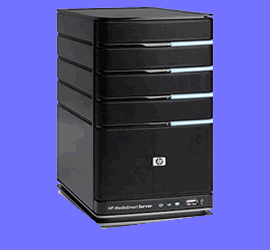
For convenience, the HP MediaSmart Server provides several ways to access shared folders:
  • To access shared folders from the Control Center
  • To access shared folders from the desktop shortcut
  • To access shared folders from the system tray
  • To access shared folders from My Network Places in Windows XP
  • To access shared folders from Network in Windows Vista
To access shared folders from the Control Center
  1. At the computer, click Start , All Programs , and then select HP MediaSmart Server .
  2. In the Control Center, click the MediaSmart Tab .
  3. Click one of the following:
    • Server - opens a folder that contains all your shared folders.
    • Photos - opens a folder for sharing photos.
    • Music - opens a folder for sharing music.
    • Videos - opens a folder for sharing videos.
To access shared folders from the desktop shortcut
  1. At the computer, go to the desktop, and then double-click the Shared Folders on Server shortcut.
    Figure 1: Shared Folders desktop shortcut
    Shared Folders desktop shortcut
  2. Double-click the shared folder you want to open.
To access shared folders from the system tray
  1. Right-click the Windows Home Server icon.
    Figure 2: Windows Home Server system tray icon
    Windows Home Server system tray icon
  2. Click Shared Folders .
  3. Double-click the shared folder you want to open.
To access shared folders from My Network Places in Windows XP
  1. At the computer, click Start , and then click My Network Places .
  2. Double-click the shared folder you want to open.
      NOTE: If the shared folders are not in My Network places, you can add them manually, see below for more information.
To access shared folders from Network in Windows Vista
  1. At the computer, click Start , and then Network .
  2. In Network, double-click the computer icon next to SERVER.
    If you changed the default name of the server, that name appears next to the computer icon instead.
    Figure 3: HP MediaSmart Server icon in Windows Network
    HP MediaSmart Server icon in Windows Network
      NOTE: Be sure to select this icon. There may be other servers in the list.
  3. Double-click the shared folder you want to open.
To add shared folders to My Network Places in Windows XP
  1. At the computer, click Start , and then click My Computer .
      NOTE: If you use the classic start menu, click My Computer on the desktop.
  2. Under Other Places , click My Network Places .
  3. Under Network Tasks , click Add a network place .
  4. In the Add Network Place Wizard, click Next .
  5. Highlight Choose another network location , and then click Next.
  6. To add the network place, you have two options:
    • In the Internet or network address box, enter the path to the shared folder you want to map, and then click Next.
      For example, enter \\SERVER\Music
      SERVER is the default name. If you changed the name of the server, use that name. Music is the shared folder’s name.
    • Click the Browse button and then use Windows Explorer to locate the network place.
      The path is usually: Entire Network, Microsoft Windows Network, Workgroup, .
  7. After locating the shared folder, click to highlight it, and then click OK .
    The location will appear in the Folder box.
  8. Specify whether you want to reconnect every time that you log on to your computer, and then click Finish .
Once you create a network place for one of the shared folders, the other shared folders on the server will be available on My Network Places .
To add a network place in Windows Vista
  NOTE: Network discovery must be turned on to add a shared folder to Network places in Windows Vista. If network discovery is not turned on, see How to add shared folders to network places on page 6-31.
  1. At the computer, click Start , and then click Network .
  2. Under Network Tasks , click Add a network place .
  3. In the Network Place Wizard, click Next .
  4. Highlight Choose another network location , and then click Next .
  5. To add the network place, you have two options:
    • In the Internet or network address box, enter the path to the shared folder you want to map, and then click Next .
      For example, enter \\SERVER\Software
      SERVER is the default name. If you changed the name of the server, use that name. Software is the shared folder’s name.
    • Click the Browse button and then use Windows Explorer to locate the network place.
      The path is usually: Entire Network, Microsoft Windows Network, Workgroup, .
      After locating the shared folder, click to highlight it, and then click OK . The location will appear in the Internet or network address box.
  6. To create a name for the network place, enter a name in the Type a name for this network place box, and then click Next .
  7. Specify whether you want to reconnect every time that you log on to your computer, and then click Finish .
Also see "HP MediaSmart Server - How to Add Shared Folders to Network Places"

Add Your Reply

(will not be displayed)

Email me when comments are added to this thread


Please log in or register to participate in this community!

Log In

Remember

Not a member? Sign up!

Did you forget your password?

close this window
close this window