Having done multiple PC restores, I can find this document to be very useful.
One thing I notice that is lacking, but suggested, was finding the drivers before the issue occurs.Another easy way you can do this is simply open up the device manager ( right click My Computer Icon on desktop or from start menu, ) and goto manage. From there device manager on the left. This will show you all your hardware respectively.So if you are in 64bit environment, knowing what your hardware is ( for example Broadcom Netxtreme 57xx gigabit controller ) should allow you to easily search the net for the driver right of the manufacturers site.
Restoring 64-bit PCs from Windows Home Server - What You Need to Know
Categories: Backup and Restore
For Windows PCs, XP brought 64-bit computing to reality, Vista made it acceptable, and Windows 7 is taking it mainstream. As with any shift to mainstream acceptance, however, confusion is sure to follow in its wake.
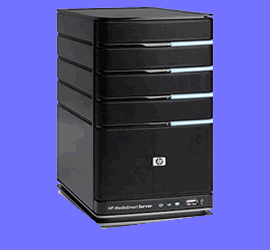
We've seen a dramatic increase as of late, both here and across the web, in the number of questions being posted by users experiencing difficulties restoring 64-bit installations from Windows Home Servers... including the HP MediaSmart Server, which is what we focus on here. With a few well constructed Google searches, you'll find a smorgasbord of forum threads and discussions on the topic, but few that really explain what's going on in less than hardcore geek speak; there are even fewer with easy to follow instructions on how to proceed.
With simplicity in mind, let's take a look at why restoring 64-bit PCs can be problematic, and a few different ways to go about it.
32... 64... Why does the number of bits prevent me from restoring my PC?!
Not everyone with 64-bit installations of Windows will have problems with restoration from the Home Server. Those who do will undoubtedly have a problem with "drivers" which, simply described, is the software component that tells the computer how to recognize and use the hardware in your PC. 64-bit operating systems, like Windows 7 64-bit, have the ability to run both 32-bit and 64-bit programs. However, the drivers must be specific, meaning a 64-bit driver cannot be used in a 32-bit OS or vice versa.
With that in mind, the next part of this puzzle is the PC restore disc itself, which is what you need to boot into in order to restore a PC from the Home Server. The restore environment on this disc is 32-bit, not 64.
That, in itself, is not the problem. As I said above, not everyone using a 64-bit OS will have restoration issues. Like a Windows installation disc, the Windows Home Server PC restore disc includes a wide variety of 32-bit drivers that supports a wide variety of PC hardware. If compatible drivers for your PCs essential hardware are included, you'll be just fine.
The problems start when the restore disc doesn't have 32-bit drivers for something in your PC that's essential to the restore process. If, for example, the disc doesn't contain a compatible 32-bit driver for your PC's network interface (which is common) then your PC won't be able to connect to the network and pull your PC backup image from the Home Server.
Reading the instructions for the PC restoration process, the first thing you'll think (or be instructed) to do is copy the restore drivers from the backup on the server and copy them to a flash drive. However, that won't work. You see, if you're running a 64-bit edition of Windows, the drivers installed are 64-bit drivers. If you copy those drivers from your Home Server backup, you're copying 64-bit drivers that won't work in the 32-bit environment of the restore disc.
That, as they say, is the "Catch-22." Of course, this is not the "only" problem users can face with restoring 64-bit installations from the Windows Home Server, but it is the most common. So, that's the issue we'll be focusing on here.
So what do I do about it? What's the solution?
The ideal solution to this increasingly common problem rests with Microsoft. Now that 64-bit computing is mainstream, it's high time we had a PC restore disc intended for 64-bit installs... meaning a PC restore disc with 64-bit restore environment. This way, the drivers we save off from our backups on the Home Server would be recognized within the restore environment, and therefore allow us to easily restore 64-bit installations from the Home Server. Until that happens, we'll just have to work our way around it.
Fortunately, there are few drivers "essential" to the recovery process. The PC Restore disc should contain the majority of essential drivers your computer uses - like those for single drive SATA/IDE compatible storage systems. The headache devices are usually SATA AHCI/RAID and Ethernet devices. If you're running a RAID, you probably already have the knowledge and skills to work around it, but those lacking support for their network interface may not know how to proceed.
What we want to do is find the 32-bit driver for your device - assuming there is one, of course. With Windows XP still in heavy use and Windows 7 available in both 32 and 64-bit flavors, nearly all manufacturers will have 32-bit and 64-bit drivers available for their hardware devices... and will for the foreseeable future. Problematic devices may include custom, proprietary hardware sold by PC makers, but even these should be few and far between.
Of course, finding these drivers can often prove challenging. And even if you do find them, most are packaged up in executable installers. Even experienced PC users may not know how to proceed in these cases.
Finding Your Drivers
The best way to find the necessary drivers to restore your 64-bit PC is to look for them BEFORE you need them. To do that, you'll need to identify them.
MediaSmart Home member Oathe shared his advice for identifying your specific components, like Ethernet controllers and Storage systems using the device manager:
"An easy way to do this is to simply open up the device manager ( right click My Computer icon on the desktop or from the Start Menu) and go to Manage. From there, click on device manager on the left. This will show you all your hardware, respectively. So, if you are in 64bit environment, knowing what your hardware is (for example Broadcom Netxtreme 57xx Gigabit controller ) should allow you to easily search the net for the driver right of the manufacturer's site." [comment edited for clarity]
Most will likely gravitate to finding drivers from a PC maker's (like Dell or Asus) support site over the maker of the specific chip, but Oathe's advice is particularly useful if the computer maker is no longer in business or doesn't offer the drivers you're looking for.
If your PC is down for the count, identifying your specific hardware components can be challenging. If your PC is store-bought from a major PC maker, like HP for example (assuming you haven't added new network or RAID cards,) finding 32-bit drivers should be relatively simple. However, if your PC is a home-built rig (that you didn't build yourself), identifying components can often mean cracking the case to get a look at what's inside.
To understand how to locate and use the correct drivers for the restoration disc, let's work through a few case examples.
Store-Bought PC - Ethernet Driver for the HP Pavilion dv6t
If you have a store bought PC, you'll usually find drivers in the support section of the manufacturer's website. Using the HP Pavilion dv6t as an example (a new HP notebook that ships with a 64-bit edition of Windows,) when accessing the support page for this model, you're prompted as to which operating system you use.
Even though you actually use a 64-bit edition of Windows, the ideal choice to make when looking for drivers to use for restoring your PC is Windows Vista (32-bit), although Windows 7 32-bit drivers 'should' also work fine in many cases.
Locate the drivers for the wired LAN (not wireless) network interface card and download the driver package.
In the case of this HP computer, the downloaded file is an .exe format that contains both the 32 and 64 bit drivers for the NIC. A setup program determines which is installed on the computer.
You can't use the exe in its current .exe form, and therefore the contents of the .exe need to be extracted in order to get the driver files. We can do this in two ways:
- The non-preferred way is by double clicking the .exe to launch the installer, which 'should' extract the contents of the .exe to a local temporary directory. If you can find that directory, you will be able to get at the driver files.
- The preferred method is to simply unpack the executable to a folder, without actually executing it. Windows won't do this without third-party tools, but there are several programs that do. WinRAR is what I use (not free), but 7-Zip and Universal Extractor are free alternatives that should do this job just fine.
Let's assume you do this the preferred way and you unpack the contents of the exe, you should now have a folder with a bunch of stuff inside.
You should be able to simply copy the entire folder to your USB drive for restoration, but if you want to be more surgical, you can go in and find just the 32-bit drivers. One of the folders inside is called WINVISTA, which contains the driver files for both the 32 and 64 bit editions of Windows. Copy the 32-bit folder over to your USB drive, and you'll be set.
If you plan on installing drivers from a 3.5 inch floppy disk during the restoration process, you'll need to take the surgical route due to space limitations on the disk.
Home-Built PC - RAID Driver for the GSATA2 / Gigabyte GA-P55A-UD4P
I'm pretty confident that those who've built a PC and run a RAID array have the knowledge to find the drivers they need, but for those who may have a home-built PC on a RAID they didn't build, I like this example; in this case, there's no "PC maker" website to run off to and get drivers by make and model. You have to do a bit more sleuthing. The info below is also applicable to any driver in a home-built PC, I'm just using RAID as the focus here.
A RAID controller, like an Ethernet network interface, will most commonly be integrated into the motherboard of the computer. It can also be a separate card, so you'll want to be sure which yours uses before you begin. If the computer boots, you shouldn't have any problems figuring out which it is, and getting the make and model of the motherboard. If it doesn't boot, you can get what you need to know by opening up the PC case and looking inside to see where all the disk drives plug in. You 'should' also find the make and model printed or stamped somewhere on the board itself.
For this example, the there are 3 different chips that perform RAID functions on this motherboard. One is the Intel P55 chipset on the motherboard, which (in this case) is common and would likely be recognized by the restore environment. However, this board also contains the JMB362 SATA2 chip that also supports RAID functions, but likely wouldn't be recognized by the Home Server restore CD. Which chip is used will depend on which SATA ports the drives are connected to. You'll probably need to download and review the manual to determine which SATA ports are tied to which chip.
In this example, let's assume the JMB362 is used. The drivers for this chip are available at Gigabyte's website. Like HP's website, when clicking on the area to download related drivers for the Gigabyte motherboard, you'll be prompted to select which OS you're using. Again, we want to choose Windows Vista 32-bit regardless of which OS you actually use on the computer.
Please note, not all websites will "prompt" you; some websites will simply list out all drivers and leave it up to you to download the correct version.
Unlike the example above, the driver files (in this case) are handily available as a pre-installation exe, which when executed should extract the drivers to a floppy or USB disk for you.
Accessing Your 32-bit System Drivers During the Restore Process
With the 32-bit drivers for your hardware loaded on to a USB key, you're properly armed to restore your 64-bit PC from the Home Server.
After you've booted from the restore CD, you'll reach a screen where it will list out which network and storage devices the CD found on your machine. At the bottom, there's a button labeled "Install Drivers." Click the button and plug in your USB or floppy drive. Provided everything's been done correctly, it should detect your hardware properly and proceed to restore your PC.
What if it still doesn't work? What are my options?
As I said above, not having the correct drivers is not the 'only' thing that can prevent you from restoring your 64-bit PC from your Home Server. If nothing you do seems to get the restore CD working properly, it is possible to restore your drive using another PC through the ClientRestoreWizard.exe program installed with the Windows Home Server Connector. Wegotserved has a walkthrough for this procedure, however I didn't have any success getting it to work when I tried it out (I honestly can't vouch that it works with the HP MediaSmart Sever, but then again I didn't spend very long trying it out either.) Also, given that selecting the wrong drive could wipe out your host PC, I wouldn't recommend this procedure for the average PC user.
As a safer alternative in these rare cases, I'd recommend re-installing your OS and programs from scratch, then restoring your files through the backups in the home server console. Sometimes that's just the only way.
Just want to make sure I understand. Even though the Win 7 is 64 bit you must get the 32 bit driver for the network card because the boot disk at this time is only 32 bit. Is that correct? When will they make an 64 bit iso file to create a 64 bit boot disk?
Regards,
BK
Thank you. This was the breakthrough information that I needed to recover my PC. I have been struggling for a week, fooling around with network connections, uninstalling Norton, trying crossover cables - you name it. It all came down to 32-bit drivers.
Fortunately, I have an HP desktop, so the drivers were easily located at the HP site. I used Universal Extractor. The results were rather strange and I really wasn't confident that it would help. However, the WHS disk found them, recognized them, loaded them, and for the first time I was finally talking to WHS. My recovery is in process.
@Oathe - You're absolutely correct... I should have been more specific on that. I'll integrate your comment into the article text and give you credit for it.
@bkcomupting - That's correct, even if you're using a 64-bit edition of Windows, you want 32-bit drivers for the restore environment on the recovery disc.
@J Scott - Yay! I'm very glad you found this helpful and got your recovery process working.
After I copy the entire folder containing the restore drivers to a thumb drive, do I just copy the 32-bit drivers into the correct folder, create a new folder with a name like NICDrivers, or does it matter as long as they are all in the same folder?
EdC said: After I copy the entire folder containing the restore drivers to a thumb drive, do I just copy the 32-bit drivers into the correct folder, create a new folder with a name like NICDrivers, or does it matter as long as they are all in the same folder?It shouldn't matter, so long as they're on the drive. I don't even think they have to be in the same folder.
Matt Whitlock said: @Oathe - You're absolutely correct... I should have been more specific on that. I'll integrate your comment into the article text and give you credit for it. @bkcomupting - That's correct, even if you're using a 64-bit edition of Windows, you want 32-bit drivers for the restore environment on the recovery disc. @J Scott - Yay! I'm very glad you found this helpful and got your recovery process working.
Thanks Matt. Never seen such friendly community support. Really appreciate the quote :)
Hey Matt,
Late thanks from me, but you can imagine my distress at finding out how many x64 users were having trouble with PC restores. I am glad you wrote this article, and I wanted to let you know that I recently bought a new Dell laptop and Win 7 Home Premium x64 was the DEFAULT OS choice. I imagine that this article will come in handy for a bunch of folks reading visiting this site.
Thanks again for your good work!
EX470, 2 GB RAM, 2x500GB, pooled; homebuilt WHS 160GB+2TB pooled; Dell Inspiron 1545, 4GB RAM, Win7 Home Prem x64; Macbook 13"; Homebuilt AMD Phenom BlackX4 8GB RAM, Windows 7 Enterprise x64, 250 GB system, 1 TB RAID 0 data
Wookiehair said: Hey Matt, Late thanks from me, but you can imagine my distress at finding out how many x64 users were having trouble with PC restores. I am glad you wrote this article, and I wanted to let you know that I recently bought a new Dell laptop and Win 7 Home Premium x64 was the DEFAULT OS choice. I imagine that this article will come in handy for a bunch of folks reading visiting this site. Thanks again for your good work!
Thank you (Wookiehair and Oathe) for... well... your thanks! It is greatly appreciated.
With 4GB of RAM pretty much the standard for anything but nettops and netbooks these days, I'd say most PCs will be sold with a 64bit OS going forward. No doubt the info here will become even more sought after until Microsoft directly addesses the issue with a new restore disc geared specifically for 64-bit users.
Next up is the long awaited, easy to follow, step by step guide for how to migrate from one home server to another. That one's in the works, but way overdue. :-)
This is a timely article for me, as I plan to add another drive to my system shortly, and go from a 2-drive RAID 1 array to a 3-drive RAID 5 setup, and I know I'll have to wipe everything.
Matt, is there a good step-by-step guide out there for the basic bare-metal restore procedure from an WHS or Mediasmart server, as I haven't done it before? I've done many a restore via Ghost, Acronis TrueImage, and other products, but this will be the first time I do such a restore from my EX490.
Thanks again for the useful information.
Everyone gets everything he wants. Me, I wanted to be a sysadmin. And for my sins --they made me one . HP EX490, Pentium DC E5300, 4GB RAM, 1x 1TB, 3x 1.5TB, 1x 2TB eSATA
@LoneWolf,
I've never put together a step by step just for restoring a PC from the server. Provided you have the correct drivers, it's pretty simple. In fact, if you've installed Windows yourself, you know pretty much everything you need to know. Here's a quick step-by-step of the process if you want to know what to expect:
1. Drop in the PC restore disc and boot your PC from it.
2. When you see the option to "Load Drivers" click the button and insert your USB stick. You'll need the 32-bit drivers for your RAID controller, regardless of what version of Windows you're using. It wouldn't hurt to grab the 32-bit version of your NIC driver in case the disc doesn't have it.
3. Once your network and RAID drivers are loaded, it should find your RAID (assuming you set that up in the RAID BIOS up front).
4. It will search the network for your MediaSmart Server. When it does, select the backup you wish to restore from and hit go.
5. Walk away and grab a sandwich, play a game, or take a nap... or all three. It may take a while depending on your network speed and how much data there is to restore.
6. When it's done, reboot and you should be good to go.
Well, now that I wrote it out, I may turn it into an article on the site after all. :-)
I very much appreciate it Matt, and your quick response. And I believe the information would make a very worthwhile article. =)
My network is gigabit, so backups and restore go relatively quickly. My EX490 has only been with me since late November, but it's definitely one of the best products I've owned. Seeing as I've owned a lot of computer parts since 1992 or so, that's something.
Everyone gets everything he wants. Me, I wanted to be a sysadmin. And for my sins --they made me one . HP EX490, Pentium DC E5300, 4GB RAM, 1x 1TB, 3x 1.5TB, 1x 2TB eSATA
Matt,
One other question I forgot --how does the restore go if you plan to have partitions of different sizes than before?
I had two 500GB drives as a single 500GB RAID 1. Now I'm going to be doing three 500GB drives as a 1TB RAID 5. I had the 100GB Windows 7 x64 recovery partition, followed by a C and a D drive, each taking up 50% of the remaining space.
I'd like to lay it out the same, the only difference being that the C and D drives will be double their previous size. Is this relatively simple with WHS' restore procedure, or will I need to reinstall the OS and then do a restore on-top afterwards?
Everyone gets everything he wants. Me, I wanted to be a sysadmin. And for my sins --they made me one . HP EX490, Pentium DC E5300, 4GB RAM, 1x 1TB, 3x 1.5TB, 1x 2TB eSATA
LoneWolf said: Matt, One other question I forgot --how does the restore go if you plan to have partitions of different sizes than before? I had two 500GB drives as a single 500GB RAID 1. Now I'm going to be doing three 500GB drives as a 1TB RAID 5. I had the 100GB Windows 7 x64 recovery partition, followed by a C and a D drive, each taking up 50% of the remaining space. I'd like to lay it out the same, the only difference being that the C and D drives will be double their previous size. Is this relatively simple with WHS' restore procedure, or will I need to reinstall the OS and then do a restore on-top afterwards?
To be 100% honest, I can't speak from experience since all my attempts at PC restoration have been with single partitions. Perhaps another member could shed some light, but I'll give you my best guess.
Provided both partitions were set up in your backups (ie, both were NTFS partitions), I would assume the both would be recreated on restore. Depending on how the partitions were laid out, you may need to edit the boot.ini file to make sure it finds the right partition to boot from, but it should give you that option at the end of the restore process according to this thread.
With two partitions, it may create a third partition or just leave the new remaining space unpartitioned after restore (not sure). If so, you can absorb that space into your existing partitions in the Windows Disk Manager.
Give it a try and find out. Just be sure to come back and share your experience.
I downloaded the latest Microsoft WHS PC Restore CD, and, with my NIC and RAID drivers on a USB thumb drive, started the restore.
The restore required I create partitions first, but fortunately gave me the option to open the storage MMC. I created three partitions (with the MBR option), assigning no drive letters, just volume names (SYS, C, and D) to keep them separate. At that point, the restore process let me choose where to restore the system recovery partition, my C drive, and my D drive.
My restore is currently in progress. I'll update the thread when it completes, and we'll find out how well this truly works.
Everyone gets everything he wants. Me, I wanted to be a sysadmin. And for my sins --they made me one . HP EX490, Pentium DC E5300, 4GB RAM, 1x 1TB, 3x 1.5TB, 1x 2TB eSATA
Okay --system back up, all successful!
After the restore, the storage MMC was still open. I used it to assign drive letters (note: your Flash drive with your 32-bit drivers gets assigned the C drive, so you've got to move it, along with any other optical drives, etc. that might take up the drive letters your physical drives would use). I then assigned an active partition --this is where I made one mistake. It being 5:30AM, I made the C: drive active. This is NOT what you want to do unless you do not have a "System (Reserved)" partition. I rebooted, and my letters were off (System (Reserved) got assigned a letter because I didn't make it active) and I got a "Missing BOOTMGR" message.
I restarted off the PC Restore CD, and went back to the Storage MMC. Removed the drive letter from System (Reserved), and re-did the drive letters properly. Made the System (Reserved) partition active. Rebooted. Voila! I'm now up and running with my original install of Windows 7 Enterprise x64. :)
Everyone gets everything he wants. Me, I wanted to be a sysadmin. And for my sins --they made me one . HP EX490, Pentium DC E5300, 4GB RAM, 1x 1TB, 3x 1.5TB, 1x 2TB eSATA
Very useful bit of exposition, Matt. Thank you.
Don't want to seem contrary, but I'd like respectfully to take issue with one statement: "The restore environment on this disc is 32-bit, not 64. That, in itself, is not the problem." For my money, that is the problem, the only problem. While all of your excellent explaining may deal with the consequences of that problem and how to work around the problem, it's worth remembering that the only thing that will eliminate the problem is a WHS restore disk (or disks) that supports both 32- and 64-bit systems.
If you or anyone reading this has any insight into when this might happen, please don't hesitate to chime in.
Again, terrific job explaining the causes and remedies involved. Let's hope MS soon finds a way to make this entire topic unnecessary.
Rich A said: Very useful bit of exposition, Matt. Thank you. Don't want to seem contrary, but I'd like respectfully to take issue with one statement: "The restore environment on this disc is 32-bit, not 64. That, in itself, is not the problem." For my money, that is the problem, the only problem. While all of your excellent explaining may deal with the consequences of that problem and how to work around the problem, it's worth remembering that the only thing that will eliminate the problem is a WHS restore disk (or disks) that supports both 32- and 64-bit systems. If you or anyone reading this has any insight into when this might happen, please don't hesitate to chime in. Again, terrific job explaining the causes and remedies involved. Let's hope MS soon finds a way to make this entire topic unnecessary.EXACT to the point. All of this is totally unnecessary if support would release the proper software to make all these problems go away---everything works great in XP but who still runs XP. Time to get with the program.
Rich A said: Very useful bit of exposition, Matt. Thank you. Don't want to seem contrary, but I'd like respectfully to take issue with one statement: "The restore environment on this disc is 32-bit, not 64. That, in itself, is not the problem." For my money, that is the problem, the only problem. While all of your excellent explaining may deal with the consequences of that problem and how to work around the problem, it's worth remembering that the only thing that will eliminate the problem is a WHS restore disk (or disks) that supports both 32- and 64-bit systems. If you or anyone reading this has any insight into when this might happen, please don't hesitate to chime in. Again, terrific job explaining the causes and remedies involved. Let's hope MS soon finds a way to make this entire topic unnecessary.
Well, I suppose you could say that the problem is the 32-bit nature of the restore disc, but it's really not. Many people successfully restore 64-bit PCs without hassle using the current restore disc. The problem is driver support. If the restore disc had compatible 32-bit drivers for everything then there would be no problem. Again, it's all about how you look at it.
You are correct on your last point though. The best solution is a 64-bit restore disc, and the only way to really resolve this going forward.
On when there will be a 64-bit restore disc... my guess is that there will be one by the time the next generation of Windos Home Server ships. Whether or not it will work with the current gen WHS is another matter though.
bkcomputing said: ---everything works great in XP but who still runs XP. Time to get with the program.
To be fair, everything works perfectly for 32-bit versions of Windows Vista and Windows 7, too. Really, this isn't about the OS as much as it's about hardware and driver support. The restore disc works perfectly with any computer if the restore disc has compatible 32-bit drivers for the storage system and ethernet controller. Frankly, that's still the majority of PCs being sold today, but I agree that this issue is going to become more and more common until a 64-bit restore disc is released.
Sounded easy and thought I could follow but must be doing something wrong. Downloaded the drivers from various, including one time HP and one time Realtek own websites. Downloaded the 7zip. Extracted files to usb and also tried to copy/paste them into route directory of usb. Run the restore CD selected show installed hardware, chose install drivers, received message that drivers found on USB but no lights on NIC. Continued with wizard but obviously doesn't find server with network card unlit. Tried many times etc etc but no joy. I have Realtek RTL8168/8111 Family NIC card and chose the 32 bit drivers (deleted the 64 folders so no chance of wrong selection) and have given up. Any last advice much appreciated... Sean
EUREKA! I determined that the NIC was on a 64-bit laptop running Windows 7. I then tried the Win7 32-bit drivers a,dn then the XP 32-bit drivers with no luck. The last try was the Vista 32-bit drivers, and it went perfectly! I just placed them in a new folder named NIC Drivers under the drivers for restore.
Having the IDENTICAL problem as "Zip13" (Sean) - right down to the EXACT NIC. Do I have to have a driver for EVERY driver listed on "Storage Devices" as is listed in "Network Devices" or can I just use the Win7-32 bit "Network Devices" driver ? My "Storgae Devices" list has "Hitachi ATA Device (Disk)"; "Generic USB CF Reader USB Device (4 of them)"; "Kingston DataTraveler 2.0 USB Device (USB stick)"; "IDE Controller (2 listed)"; and "ATA Channel 0 (2 of them listed"; and "ATA Channel 1 (2 of them also listed)". Total starage device=12.
The driver for the NIC never loads (no light in back by the Cat5e cable) - ergo no network connection. Booting a working OS (64-bit) from another hard drive does light up the network so I know the NIC is OK. And how does the WHS process know just where on the USB stick to find the correct driver(s)? I've put drivers in a folder called "DRIVERS" and in the root of the USB stick. I also put the 32-bit drivers in the folder created by the WHS "restore drivers" process by logging on to another working machine and accessing the backup for the machine I'm trying to restore.
So what about the latest (dated 11/2009) WHS Restore CD image available from Microsoft ? Is this worth the effort to build ? And does anyone know if it is the answer to 32/64 bit support ?
I'm only stumped. I haven't given up ... yet !
As I said, I didn't give up. I found a small (128mb) USB stick that I could put just the drivers needed for my system. I went to the manufacturer's website (MSI) and downloaded ALL x86 (32-bit) drivers - Audio; Video; Chipset; and LAN. Oh yes, I downloaded an updated WHS Restore CD from Microsoft. Rebooted with new CD and inserted the USB stick when prompted. BUMMER ! Still NO Network - ergo, the process would go not further.
SO, having read somewhere that Vista drivers seem to work better than my Win7 (32-bit) drivers or the XP ones, I downloaded the Vista32 drivers from MSI and WALLA !!! The netwrok woke up and the process now allows me to "see" my backups so I can now restore a potentially sick hard drive.
In summary, I don't believe the process needed all those extra drivers; VGA, Chipset, or Audio - just the netwrok stuff. However, even though I am restoring a Win7 x64 system, the Win7 x86 drivers did not work - only the Vista x86 drivers. Go figure ...
One more thing - once I got the network drivers installed and operational, the process found my homesever automatically. I've changed the name from the default "SERVER" but the updated WHS Restore CD found the server without futher manual intervention. Would the original CD also find my server ? Don't know. Didn't try it.
Final thought. Don't give up when "stumped". Take that coffe break and try somethiong else. Reading these forums have defintely helped me on this one.
Thanks for this thread! It took a few tries, but ultimately I succeeded - on my HP G60 PC I ran into this issue with the NIC drivers. I followed the instructions to download the drivers from hp.com, but no joy. While it reported that updated drivers were found and applied, it ultimately became clear that only the 64-bit drivers were actually found. No drivers found if I copied over only the extracted "32" folder, but drivers found when the "64" folder was there (either with or without the "32" folder).
Going to the NIC vendor's site and downloading their Vista 32 bit drivers did the trick however and my PC is happily restoring as I type!
Thanks again for taking the time to document this, and for all the helpful comments from others!
Cheers,
Ed
RSS